








Key Points:
- US. crude oil on the 1-hour timeframe, after a consolidation phase, has collected Buy Side Liquidity and now holds potential to move toward Sell Side Liquidity;
- From a fundamental perspective, the potential decision by the European Commission to gradually eliminate Russian oil imports could shift the medium-term market structure toward a more bullish bias and increase the geopolitical risk premium;
- Increased Venezuelan exports to Asia may exert short-term pressure on price, but their impact is assessed as limited compared to geopolitical shocks;
- The convergence of oil prices with U.S. 10-year Treasury yields is significant; rising oil alongside falling yields could confirm a bullish scenario, and vice versa;
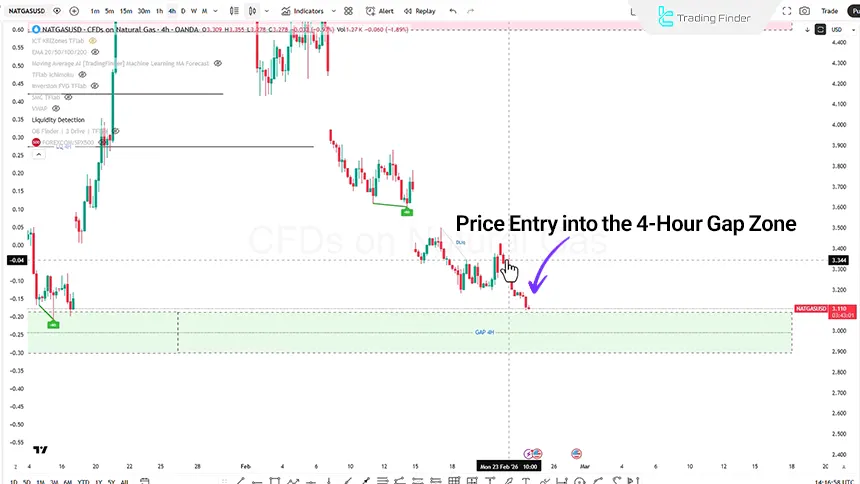
- US. natural gas on the 4-hour timeframe remains under selling pressure, and entry into the gap zone is considered a key decision area;
- A valid close below the gap could activate downside targets toward the $2.60 area; otherwise, a corrective rebound remains possible.
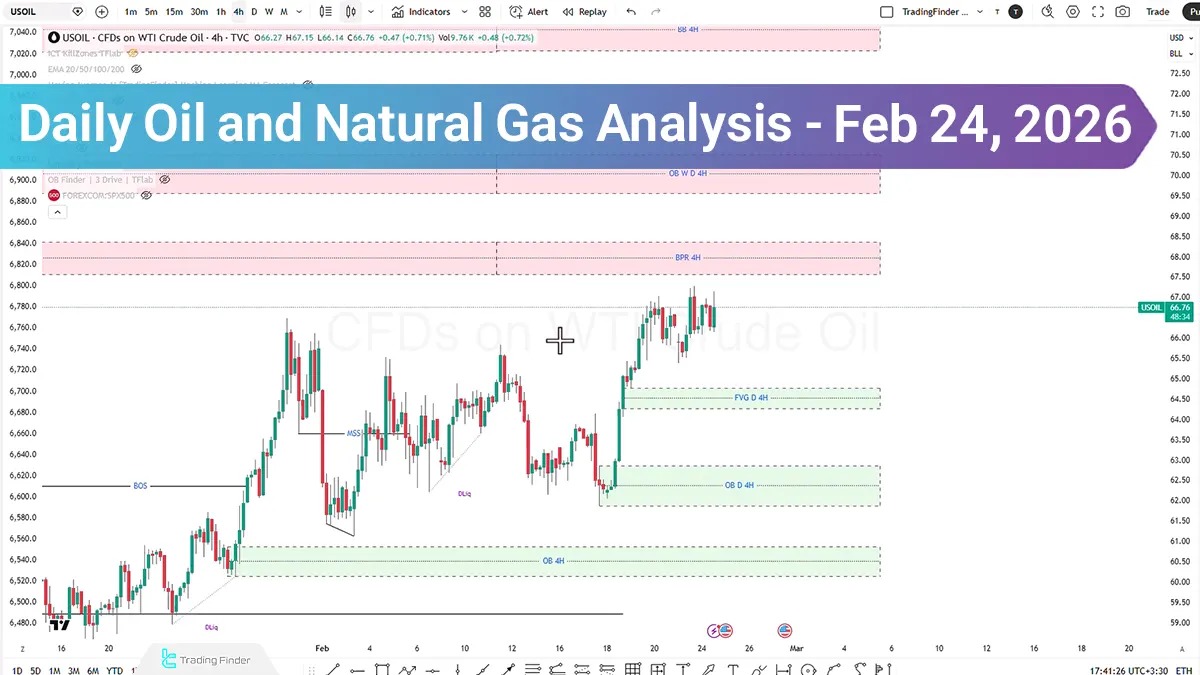
In trading on February 24, 2026, oil prices moved out of a consolidation phase and into a decision-making stage after sweeping buy-side liquidity.
The dominant scenario involves completing Sell Side Liquidity collection and reacting to the Order Block zone. Simultaneously, fundamental data including the potential decision by the European Commission regarding the gradual elimination of Russian oil imports and developments in Venezuelan exports is influencing the market’s medium-term outlook.
In natural gas, selling pressure on the 4-hour timeframe has intensified, placing the gap zones and lower targets within the market’s reach.
Analysis of US Oil on the 1-Hour Timeframe
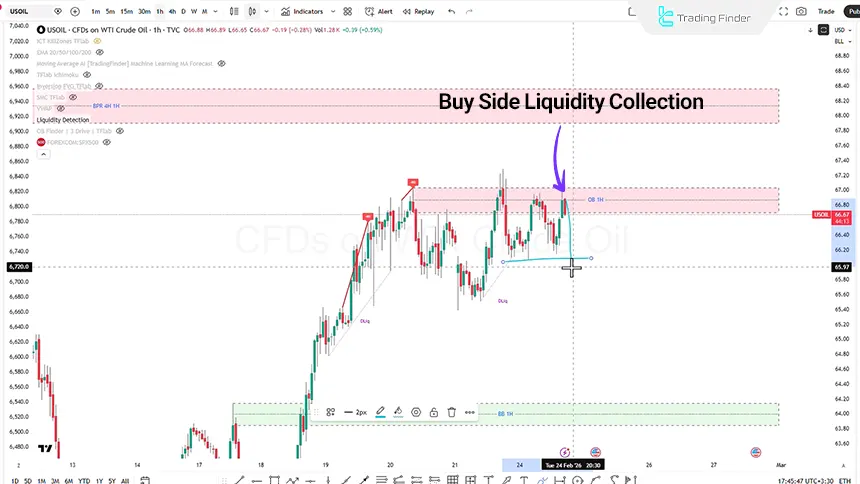
On the 1-hour chart, price, after a ranging period, has successfully collected Buy Side Liquidity and now holds potential to move toward Sell Side Liquidity. The probable scenario is outlined as follows:
- A bearish move to collect Sell Side Liquidity;
- Entry into the Order Block zone;
- Assessment of weakness in bearish momentum;
- In the event of a Market Structure Break, activation of the long entry scenario.
In this scenario, the stop loss can be placed beyond the Order Block zone, and targets are determined based on market liquidity levels.
Additionally, if price moves with strong full-body candles accompanied by powerful bearish momentum, the probability of the market entering a deeper bearish phase and completing liquidity collection at lower levels increases.
Analysis of U.S. Natural Gas on the 4-Hour Timeframe (H4)
On the 4-hour timeframe, natural gas has come under selling pressure and is entering a range zone. If selling pressure increases and strong full-body candles form, the bearish scenario will be activated. In this case:
- Price entry into the Gap zone is likely;
- If a candle closes below this zone, downside targets will be activated;
- Movement targets are considered at the $2.60 level.
Therefore, candlestick behavior and the type of candle close within the gap zone play a key role in confirming or rejecting the bearish scenario.
Fundamental Geopolitical Factors Affecting US Oil and Natural Gas
From a fundamental analysis perspective, the European Commission has announced its intention to present a proposal on April 15 to gradually eliminate the remaining Russian oil imports. This action could structurally shift the market toward a bullish configuration in the medium term.
Europe’s increased dependence on Middle Eastern and U.S. oil could potentially lead to a higher geopolitical risk premium. Even if alternative supply is secured, the market would remain prone to price appreciation.
Conversely, Venezuelan oil exports in March are being prepared with larger cargoes, and increased shipments to India could strengthen supply in the Asian market.
This factor may exert short-term downward pressure on price but lacks the capacity to offset geopolitical shocks. As a result:
- With the persistence of geopolitical risks, any price correction to lower levels may be evaluated as a buying opportunity;
- If oil prices decline simultaneously with rising U.S. 10-year Treasury yields, this convergence could confirm the continuation of a bearish trend;
- Conversely, rising oil prices alongside declining 10-year yields could signal strengthening geopolitical risk and the continuation of the bullish move.
Conclusion
Oil’s technical structure in the short term is positioned to complete liquidity collection and subsequently activate the bullish scenario in the event of a Market Structure Break. In natural gas, selling pressure on the 4-hour timeframe remains dominant, and price behavior within the gap zone along with the type of candle close will determine the continuation of the path.
Overall, risk management based on liquidity, momentum, and convergence of macro data is the key to decision-making under current market conditions.