



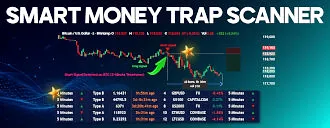




Day trading in the Forex market requires precision, speed, and a cost-efficient trading environment. Unlike swing or position trading, day traders open and close multiple positions within a single session, making factors such as spreads, execution speed, and platform stability critically important.
Forex brokers play a central role in day trading performance. Tight spreads and low commissions directly impact profitability, while fast execution and minimal slippage ensure that trades are entered and exited at intended price levels. In highly liquid sessions such as the London and New York overlap, even milliseconds of delay can influence outcomes.
The guide below evaluates the best Forex brokers for day trading based on spreads, commissions, execution quality, platform capabilities, and regulatory reliability to help traders optimize their short-term trading performance.
 | AMARKETS | |||
 | FXTM | |||
 | TMGM | |||
| 4 |  | ERRANTE | ||
| 5 |  | FxGrow | ||
| 6 |  | alpari | ||
| 7 |  | FXGT | ||
| 8 |  | MONETA MARKETS |
Trustpilot Rankings of Day Trading Forex Brokers
When evaluating Forex brokers for day trading, quantitative factors such as spreads and execution speed are critical, but user feedback offers valuable insight into real-world trading conditions. Trustpilot rankings reflect the collective experience of thousands of traders, highlighting strengths and weaknesses that may not be visible in broker specifications.
Day trading requires consistent execution, especially during high-volume sessions like the London and New York overlap. Any delays, slippage, or platform instability can directly impact short-term trades. For this reason, Trustpilot reviews often reveal how brokers perform under real market pressure.
Broker Name | Trustpilot Rating | Number of Reviews |
3,553 | ||
FXGT | 1,545 | |
Moneta Markets | 496 | |
TMGM | 876 | |
Errante | 51 | |
FxGrow | 4 | |
Alpari | 3.2/5⭐ | 103 |
1,076 |
Platform Options in Day Trading Brokerages
Trading platforms are the core working environment for day traders, directly influencing execution speed, analysis precision, and overall trading efficiency. Since day trading relies on rapid decision-making and frequent order placement, the choice of platform can significantly impact performance.
Forex brokers typically offer a range of platforms designed to support both manual and automated trading strategies. Each platform provides different tools, execution capabilities, and user experiences tailored to short-term trading needs.
Broker Name | Trading Platforms |
AMarkets | MT4, MT5, Mobile Proprietary App |
FXTM | MT4, MT5, FXTM Trader App |
MT4, MT5, IRESS, TMGM Mobile App | |
MetaTrader 4, MetaTrader 5, cTrader, TradingView | |
PU Prime | MT4, MT5, PU Prime app |
VT Markets | MetaTrader 4, MetaTrader 5, Webtrader+, VT Markets App |
TeleTrade | MT4, MT5 |
CDOMarkets | MT4, MT5, Mobile Apps |
Deposit and Withdrawal Methods for Day Trading Brokers
Deposit and withdrawal methods play a critical role in the overall efficiency of day trading, where timing and liquidity directly impact trading performance. Reliable brokers typically support a wide range of funding options, including bank transfers, credit and debit cards, and e-wallets such as Skrill, Neteller, and PayPal.
Faster payment methods enable traders to react quickly to market opportunities, especially during high-volatility sessions. Additionally, the availability of instant or same-day deposits ensures that traders can maintain sufficient margin levels without disruption.
Broker Name | Deposit Methods | Withdrawal Methods |
FxGrow | Skrill, Neteller, Bank Wire | Skrill, Neteller, Bank Wire |
Alpari | Local Payment Solutions, Credit/Debit Cards, E-Wallets, Bank Wire Transfers (in some regions), Crypto Payments | Local Payment Solutions, Credit/Debit Cards, E-Wallets, Bank Wire Transfers (in some regions), Crypto Payments |
VISA, Mastercard, Bitwallet, Sticpay, Instant Local Bank Transfers / QR, Neteller, Apple Pay, Google Pay | VISA, Mastercard, Bitwallet, Sticpay, Neteller, Apply Pay, Google Pay | |
Wire transfer, Visa/MasterCard, Fasapay, Stickpay, JCB | Wire transfer, Visa/MasterCard, Fasapay, Stickpay, JCB | |
D Prime | Local bank Transfers, E-wallets, International Wire Transfers, Credit/Debit Card | Local bank Transfers, E-wallets, International Wire Transfers, Credit/Debit Card |
LiteFinance | Credit/Debit Cards, Bank Wire, STICPAY, Perfect Money, Africa Mobile Money, Volet | Credit/Debit Cards, Bank Wire, STICPAY, Perfect Money, Africa Mobile Money, Volet |
IFC Markets | Credit/Debit Cards, Bank Transfer, E-Payments, Local Transfer, Crypto, etc. | Credit/Debit Cards, Bank Transfer, E-Payments, Local Transfer, Crypto, etc. |
FXCC | Credit/Debit Card, E-Wallets, EeziePay, Awepay, Crypto | Credit/Debit Card, E-Wallets, EeziePay, Awepay, Crypto |
Execution Model Used by Day Trading Forex Brokers
Execution type is one of the most critical factors for day traders, as it directly affects order speed, price accuracy, and overall trade outcome. In fast-moving markets, even minor delays or pricing differences can significantly impact profitability, especially for scalping and high-frequency strategies.
Forex brokers use different execution models to process trades, each with its own advantages and limitations. Understanding these models helps traders choose a broker that aligns with their trading style and risk tolerance.
Broker Name | Execution Model |
TMGM | Market Execution, Limit Order, ECN |
Errante | Market, ECN |
Market | |
Market | |
FXGiants | Instant, Market |
FXOpen | Market, Stop, Stop-limit, Limit, OCO, Iceberg |
Ultima Markets | Market |
OneRoyal | Market |
Top 6 Day Trading Forex Brokers Reviewed
Day trading requires brokers that can consistently deliver fast execution, tight spreads, and stable platform performance under high market activity. Since traders open and close multiple positions within short timeframes, even small inefficiencies in pricing or execution can significantly impact results.
The top brokers for day trading are selected based on a combination of performance-driven criteria, focusing on both trading conditions and operational reliability. Below are six top Forex brokers that combine competitive cost structures, strong execution quality, and advanced trading platforms, making them suitable choices for day trading in fast-paced market conditions.
AMarkets
AMarkets is a Forex and CFD broker established in 2007, serving over 2 million clients globally with a focus on flexible trading conditions and diverse account offerings. The broker operates under offshore regulatory authorities including FSA, FSC, and MISA, and is also a member of the Financial Commission, providing compensation coverage up to €20,000 per claim.

AMarkets offers a wide range of trading instruments including Forex, cryptocurrencies, stocks, indices, commodities, ETFs, and bonds, with over 500 tradable assets available. The broker supports both instant and market execution, ensuring flexibility for different trading strategies.
There are multiple account types in AMarkets dashboard including Standard, ECN, Fixed, and Crypto accounts. The minimum deposit starts at $100, while leverage can reach up to 1:3000, making it attractive for traders seeking high exposure. Spreads begin from 0 pips on ECN accounts, with a commission of $2.5 per lot per side, while other accounts offer commission-free trading.
AMarkets supports MetaTrader 4, MetaTrader 5, and a proprietary mobile app, providing access to advanced charting tools, automated trading, and mobile trading capabilities. The broker also offers AMarkets copy trading, allowing users to replicate strategies from experienced traders.
AMarkets deposit and withdrawal include bank cards, cryptocurrencies, e-wallets, and bank transfers, with zero deposit fees and fast processing. Withdrawals are typically completed within 24 hours, although fees may apply depending on the method.
Overall, AMarkets stands out for its high leverage, diverse account structure, and strong copy trading features, although its offshore regulation may be a consideration for risk-sensitive traders.
Account Types | Standard, ECN, Fixed, Crypto, Demo |
Regulating Authorities | FSA, FSC, MISA, Financial Commission |
Minimum Deposit | $100 |
Deposit Methods | Credit/Debit Cards, Crypto, Bank Transfer, Volet, Perfect Money |
Withdrawal Methods | Credit/Debit Cards, Crypto, Bank Transfer, Volet, TC Pay |
Maximum Leverage | Up to 1:3000 |
Trading Platforms & Apps | MetaTrader 4, MetaTrader 5, Mobile App |
AMarkets Pros and Cons
When assessing AMarkets for day trading, its key strengths include strong regulatory coverage, a reliable execution model, and a broad range of tradable instruments, though certain limitations may impact overall suitability.
Pros | Cons |
Long track record (since 2007) | No Tier-1 regulation (FCA, ASIC) |
High leverage up to 1:3000 | Restricted in several countries |
Multiple account types including Crypto | ECN account requires higher deposit |
Copy trading available | Withdrawal fees apply |
MT4, MT5, and mobile app support | - |
500+ tradable instruments | - |
FXTM
FXTM (ForexTime) is a globally recognized Forex and CFD broker established in 2011, serving over 1 million traders across more than 150 countries. The broker offers access to a wide range of financial instruments including Forex, stocks, indices, commodities, cryptocurrencies, and metals, with over 1000 tradable assets available.
FXTM operates under the Financial Services Commission (FSC) of Mauritius, which places it in the offshore regulatory category. While it previously held licenses from top-tier regulators, its current regulatory coverage is more limited, which may be a consideration for risk-sensitive traders.
FXTM dashboard provides three main account types: Advantage, Advantage Plus, and Advantage Stocks. The minimum deposit is $200, which is higher than many competitors, while spreads start from 0.0 pips on Advantage accounts with commissions, and from 1.5 pips on commission-free accounts. Leverage can reach up to 1:3000, making it suitable for traders seeking high exposure.
FXTM supports MetaTrader 4, MetaTrader 5, and its proprietary FXTM Trader App, offering strong charting tools, automated trading capabilities, and mobile access. The broker also provides a copy trading service called FXTM Invest, allowing users to follow and replicate professional traders.
FXTM deposit and withdrawal methods include bank cards, e-wallets such as Skrill and Neteller, bank transfers, and cryptocurrencies, with most deposits processed quickly and without broker fees. Withdrawals are generally efficient, though fees vary depending on the method.
Overall, the broker stands out for its high leverage, FXTM rebate, diverse asset offering, and strong educational resources, although its offshore regulation and higher minimum deposit may be drawbacks.
Account Types | Advantage, Advantage Plus, Advantage Stocks |
Regulating Authorities | FSC (Mauritius) |
Minimum Deposit | $200 |
Deposit Methods | Visa, MasterCard, Skrill, Neteller, Perfect Money, Bank Transfer, Crypto, Local Payments |
Withdrawal Methods | Visa, MasterCard, Skrill, Neteller, Perfect Money, Bank Transfer, Crypto, Local Payments |
Maximum Leverage | Up to 1:3000 |
Trading Platforms & Apps | MetaTrader 4, MetaTrader 5, FXTM Trader App |
FXTM Pros and Cons
FXTM offers several advantages for day trading, including solid regulatory backing, efficient execution, and diverse market access, although some constraints may influence trader decisions.
Pros | Cons |
1000+ tradable instruments | Weak regulatory coverage (FSC only) |
High leverage up to 1:3000 | Higher minimum deposit ($200) |
Multiple account types | Limited crypto offerings |
MT4, MT5, and proprietary app | No Tier-1 regulation |
Copy trading (FXTM Invest) | Restricted in several countries |
Strong educational resources | - |
TMGM
TMGM (TradeMax Global Markets) is an Australian Forex and CFD broker founded in 2013, offering access to more than 12,000 tradable instruments across Forex, stocks, indices, commodities, energies, and cryptocurrencies. This extensive asset coverage makes TMGM one of the most diverse brokers in terms of market access, particularly suitable for day traders seeking multi-asset opportunities.

TMGM verification process operates under a strong regulatory framework led by ASIC in Australia, supported by additional licenses from VFSC, FSC, and CMA. This multi-jurisdictional setup allows TMGM to provide both high-security trading environments under Tier-1 regulation and flexible conditions such as higher leverage under offshore entities. Client funds are segregated, and protection mechanisms such as negative balance protection are available under certain entities.
TMGM offers two primary account types: EDGE (ECN) and CLASSIC. The minimum deposit starts at $100, while spreads begin from 0.0 pips on EDGE accounts with a $3.5 commission per lot, and from 1.0 pip on commission-free CLASSIC accounts. Maximum leverage can reach up to 1:1000 depending on the regulatory entity.
The broker supports MetaTrader 4, MetaTrader 5, IRESS, and its proprietary mobile app, delivering advanced charting tools, fast execution speeds (averaging under 30ms), and support for automated trading strategies. Copy trading and social trading are also available through integrated platforms.
TMGM deposit and withdrawal methods include bank transfers, cards, e-wallets, and cryptocurrencies, with most deposits processed instantly and no broker-side fees applied. Withdrawals are typically completed within 1-4 business days.
Overall, the broker stands out for its strong regulation, easy TMGM registration, massive asset offering, and fast execution, although inactivity fees and limited educational depth may be drawbacks.
Account Types | EDGE (ECN), CLASSIC |
Regulating Authorities | ASIC, VFSC, FSC, CMA, FSA |
Minimum Deposit | $100 |
Deposit Methods | Visa, MasterCard, Bank Transfer, Neteller, Skrill, UnionPay, Revolut, WISE, Crypto (USDT, USDC) |
Withdrawal Methods | Bank Transfer, Neteller, Skrill, Revolut, WISE, Crypto (USDT, USDC) |
Maximum Leverage | Up to 1:1000 |
Trading Platforms & Apps | MetaTrader 4, MetaTrader 5, IRESS, TMGM Mobile App |
TMGM Pros and Cons
In evaluating TMGM for day trading, its regulatory framework, execution quality, and extensive instrument selection stand out, while a few limitations may affect its appeal.
Pros | Cons |
Strong regulation (ASIC Tier-1) | Inactivity fee applies |
12,000+ tradable instruments | Limited account types |
Tight spreads from 0.0 pips | Educational resources limited |
Fast execution (~30ms) | Some withdrawal complaints |
Supports MT4, MT5, IRESS | - |
Copy & social trading available | - |
Errante
Errante is a Forex and CFD broker established in 2018, operating under CySEC and FSA regulation, offering a balance between European oversight and offshore flexibility. The CySEC license ensures compliance with EU standards and investor protection through the ICF scheme up to €20,000, while the offshore entity enables higher leverage and broader global access.

The broker provides access to over 150 tradable instruments across Forex, metals, indices, energy, stocks, and cryptocurrencies. While the asset range is more limited compared to larger brokers, it still covers the essential markets required for diversified trading strategies.
Errante offers four account types including Standard, Premium, VIP, and Tailor Made. The minimum deposit starts at $50, making it accessible for beginners, while spreads begin from 0.8 pips on standard accounts and from 0.0 pips on Tailor Made accounts with a $3 commission. Maximum leverage can reach up to 1:1000, depending on the Errante verification entity.
The broker supports MetaTrader 4, MetaTrader 5, cTrader, and TradingView, providing flexibility for both discretionary and algorithmic trading. Additional features include Errante rebate, copy trading, PAMM, and MAM accounts, allowing users to participate in managed and social trading strategies.
Funding options include bank transfers, cards, e-wallets, and cryptocurrencies such as Bitcoin, Ethereum, and USDT, with deposits processed instantly in most cases and withdrawals completed within 1-4 business days.
Overall, Errante stands out for its platform diversity, flexible leverage, straightforward Errante registration, and investment solutions, although its shorter track record and relatively limited instrument range may be considerations.
Account Types | Standard, Premium, VIP, Tailor Made |
Regulating Authorities | CySEC, FSA |
Minimum Deposit | $50 |
Deposit Methods | Bank Transfer, Visa, MasterCard, Skrill, Neteller, Volet, SticPay, Crypto (BTC, ETH, USDT, XRP) |
Withdrawal Methods | Bank Transfer, Visa, MasterCard, Skrill, Neteller, Volet, SticPay, Crypto |
Maximum Leverage | Up to 1:1000 |
Trading Platforms & Apps | MetaTrader 4, MetaTrader 5, cTrader, TradingView |
Errante Pros and Cons
Errante provides a competitive day trading environment with dependable regulation, structured execution, and wide asset coverage, though certain factors may limit its suitability.
Pros | Cons |
Regulated by CySEC (EU) | Short operational history |
Low minimum deposit ($50) | Limited instruments (150+) |
High leverage up to 1:1000 | No Cent account |
Supports MT4, MT5, cTrader, TradingView | Limited swap-free duration |
Copy trading, PAMM, MAM accounts | Mixed user ratings |
Multiple payment methods including crypto | - |
FxGrow
FxGrow is a Forex and CFD broker established in 2008, operating under CySEC regulation and aligned with multiple European financial authorities such as BaFin, CNMV, and ACPR. This regulatory framework ensures compliance with MiFID standards, providing a secure trading environment with features like segregated funds and investor protection schemes up to €20,000.
The broker offers access to over 600 tradable instruments, including Forex pairs, indices, commodities, metals, futures CFDs, and cryptocurrencies. While not as extensive as some competitors, this range covers the essential markets required for most retail trading strategies.
FxGrow dashboard provides several ECN-based account types, including ECN, ECN Plus, ECN Elite, and Demo accounts. The minimum deposit starts at $100, while spreads vary depending on the account, ranging from around 0.1 pips to ultra-tight levels. A commission of $8 per lot applies to certain accounts. Maximum leverage can reach up to 1:300, depending on regulatory conditions.
The broker supports MetaTrader 5 as its primary platform (choosable through FxGrow registration), offering advanced charting tools, algorithmic trading capabilities, and fast execution speeds. While it lacks MT4 and proprietary platforms, MT5 provides sufficient functionality for most day trading strategies.
Funding options include bank transfers, Skrill, and Neteller, with no broker-side deposit or withdrawal fees. Processing times and availability of each method may vary, because of FxGrow verification entity.
Overall, FxGrow stands out for its strong European regulation, ECN trading environment, and transparent pricing, although its limited platform selection and payment methods may be drawbacks.
Account Types | ECN, ECN Plus, ECN Elite, Demo |
Regulating Authorities | CySEC, CNMV, MNB, FINANSTILSYNET, ACPR, KNF, BaFin, FI, HCMC |
Minimum Deposit | $100 |
Deposit Methods | Bank Transfer, Skrill, Neteller |
Withdrawal Methods | Bank Transfer, Skrill, Neteller |
Maximum Leverage | Up to 1:300 |
Trading Platforms & Apps | MetaTrader 5 |
FxGrow Pros and Cons
From a day trading perspective, FxGrow benefits from strong regulation, a consistent execution model, and varied trading instruments, although some drawbacks should be considered.
Pros | Cons |
Regulated by CySEC (EU) | Only MT5 platform available |
ECN-based account structure | Limited payment methods |
Access to 600+ instruments | No MT4 support |
No deposit/withdrawal fees | No PAMM accounts |
Copy trading available | Mixed user reviews |
Strong European compliance (MiFID) | - |
Alpari
Alpari is one of the longest-standing Forex and CFD brokers, founded in 1998, with a global presence across more than 150 countries and over 1 million clients. Its long operational history and large user base have established it as a recognizable name in the retail trading industry, particularly among traders seeking flexible leverage and PAMM investment solutions.
The broker operates under offshore regulators such as MISA and NBRB, offering segregated client funds and negative balance protection. However, the absence of Tier-1 regulation and investor compensation schemes may be a concern for traders prioritizing maximum security.
Alpari provides multiple account types including Standard, ECN, and Pro ECN, alongside a demo account. The minimum deposit starts from $50, making it accessible for beginners. Spreads begin from around 0.3 pips on standard accounts and from 0.0 pips on Pro ECN accounts, with commission-based pricing depending on the account type. Maximum leverage can reach up to 1:3000, one of the highest in the industry and available to all traders, no matter where your Alpari verification region is.
The broker supports MetaTrader 4, MetaTrader 5, and WebTrader, allowing traders to implement both manual and algorithmic strategies. A key feature of Alpari is its PAMM system, enabling investors to allocate funds to professional traders and participate in passive trading.
Funding methods include local payment solutions, cards, e-wallets, bank transfers, and cryptocurrencies, with most deposits processed quickly and withdrawals typically completed within 1–5 business days.
Overall, the broker stands out for its long track record, Alpari rebate, high leverage, and PAMM investment options, although its regulatory limitations and moderate user ratings should be considered.
Account Types | Standard, ECN, Pro ECN, Demo |
Regulating Authorities | MISA, NBRB |
Minimum Deposit | $50 |
Deposit Methods | Local Payments, Credit/Debit Cards, E-Wallets, Bank Transfer, Crypto |
Withdrawal Methods | Local Payments, Credit/Debit Cards, E-Wallets, Bank Transfer, Crypto |
Maximum Leverage | Up to 1:3000 |
Trading Platforms & Apps | MetaTrader 4, MetaTrader 5, WebTrader |
Alpari Pros and Cons
Alpari stands out in day trading due to its regulatory strength, execution efficiency, and broad instrument range, though certain limitations may still apply.
Pros | Cons |
Established broker (since 1998) | Weak regulatory coverage (offshore only) |
High leverage up to 1:3000 | No investor compensation scheme |
Multiple account types (ECN, Pro ECN) | Moderate user ratings |
PAMM investment system | Limited Tier-1 oversight |
Supports MT4, MT5, WebTrader | Inactivity fees apply |
Wide range of payment methods | - |
Criteria For Choosing the Best Forex Brokers for Day Trading
Selecting the best Forex brokers for day trading requires a highly structured evaluation process, as traders depend on these platforms for executing multiple trades within short timeframes.
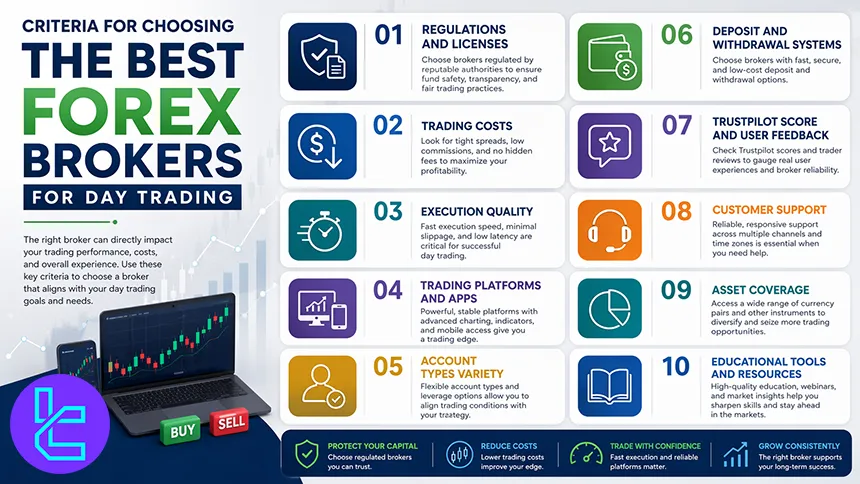
TradingFinder applies a comprehensive methodology based on 19 data-driven metrics, ensuring transparency, objectivity, and relevance to real trading conditions. This framework is designed to assess every critical aspect of a broker’s performance, with a strong focus on execution efficiency and cost optimization.
Day trading places unique demands on brokers, including ultra-fast execution, tight spreads, and stable infrastructure during high-volatility periods. As a result, the evaluation process goes beyond general broker features and emphasizes performance under real market pressure, particularly during peak sessions such as London and New York overlaps.
The core criteria used in selecting day trading brokers include:
- Regulations and Licenses: Verification of broker legitimacy and protection of client funds under recognized financial authorities;
- Trading Costs: Analysis of spreads, commissions, and hidden fees affecting high-frequency trading profitability;
- Execution Quality: Speed of order execution, slippage control, and reliability during volatile market conditions;
- Trading Platforms and Apps: Availability of MT4, MT5, cTrader, and TradingView with fast and stable performance;
- Account Types Variety: Access to ECN and RAW accounts suitable for low-cost, high-frequency strategies;
- Deposit and Withdrawal Systems: Efficiency, speed, and transparency of funding processes;
- Trustpilot Score and User Feedback: Real trader experiences regarding execution, withdrawals, and service quality;
- Customer Support: Responsiveness and ability to resolve issues quickly during active trading sessions;
- Asset Coverage: Availability of major Forex pairs with deep liquidity;
- Educational ToolsandResources: Access to analytical tools and trading support materials.
This multi-layered evaluation ensures that selected brokers provide the speed, pricing efficiency, and reliability required for consistent day trading performance in fast-moving Forex markets.
How Does Execution Speed Impact Day Trading Performance?
Execution speed is a core factor in day trading, where trades are often opened and closed within seconds or minutes. Even minor delays can lead to price differences that affect entry accuracy and overall profitability. Why execution speed matters:
- Faster order placement reduces the risk of entering trades at unfavorable prices
- High-speed execution minimizes exposure to rapid price changes
- Scalping strategies depend on millisecond-level precision
- Delayed execution increases slippage and missed opportunities
Impact of execution trading outcomes can be seen in the table below:
Scenario | Fast Execution | Slow Execution |
Entry Price | Accurate | Often worse than expected |
Slippage | Minimal | Frequent |
Trade Timing | Precise | Delayed |
Profitability | Consistent | Reduced |
For day traders, brokers with low latency infrastructure and high-speed order routing provide a clear advantage in fast-moving markets.
How Do Spreads and Commissions Affect High-Frequency Trading?
High-frequency trading strategies involve executing dozens or even hundreds of trades daily, making cost structure a critical factor. Cost impact breakdown:
- Spreads act as the primary cost per trade
- Commissions apply on ECN accounts per lot traded
- Small differences in cost multiply across multiple trades
- Hidden fees can reduce net profitability over time
Example of cost comparison for high-frequency trading:
Model | Spread | Commission | Total Cost per Trade |
Standard | 1.2 pips | $0 | Higher overall |
ECN | 0.1 pips | $6 per lot | Lower for active traders |
Day traders typically prefer ECN or RAW accounts because tighter spreads reduce total trading costs despite commissions.
What Role Does Slippage Play in Day Trading Strategies?
Slippage occurs when a trade is executed at a different price than requested, often during high volatility or low liquidity. Types of slippages:
- Positive slippage: Better price than expected
- Negative slippage: Worse price than expected
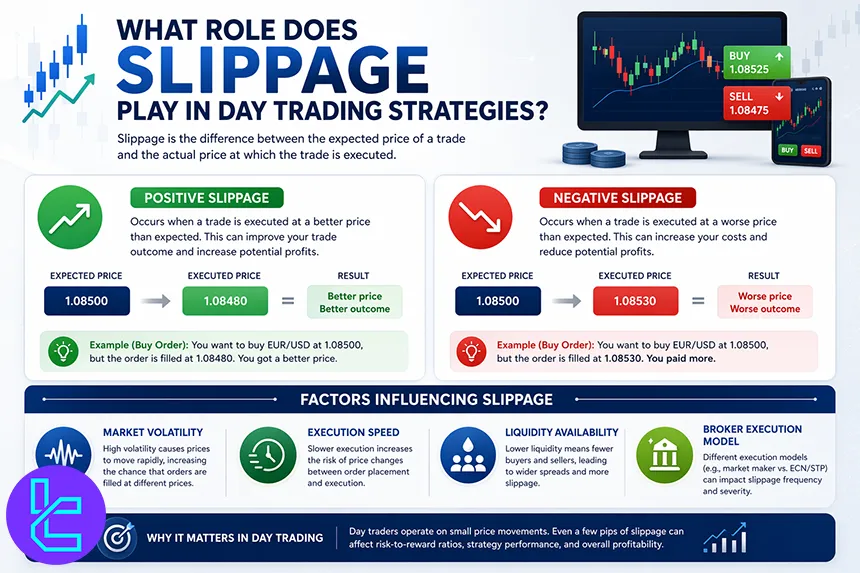
In all types of slippage, there are factors influencing slippage, which are:
- Market volatility
- Execution speed
- Liquidity availability
- Broker execution model
Slippage can significantly impact short-term strategies, especially scalping, where profit targets are small. Reducing slippage requires choosing brokers with strong liquidity access and fast execution systems.
Which Execution Model Is Best for Day Traders (ECN, STP, Market Maker)?
Choosing the right execution model is critical for day traders, as it directly affects order speed, pricing transparency, and overall trading efficiency. Each model processes orders differently, which can influence slippage, spreads, and execution reliability during fast market conditions. Detailed comparison of execution models:
Model | How It Works | Advantages | Limitations | Best For |
ECN | Direct access to liquidity providers and interbank market | Raw spreads, deep liquidity, no dealing desk | Commission-based, variable spreads | Scalpers, high-frequency traders |
STP | Orders routed to external liquidity providers without dealing desk | Fast execution, no requotes | Slightly wider spreads than ECN | Active day traders |
Market Maker | Broker acts as counterparty to trades | Fixed spreads, stable pricing | Potential conflict of interest | Beginners, low-frequency traders |
ECN accounts are typically the most suitable for day trading because they offer the tightest spreads and fastest execution speeds, especially during peak liquidity hours. However, traders must account for commission costs, which can add up depending on trade volume.
STP models provide a balanced environment with relatively fast execution and fewer conflicts of interest, making them a solid alternative for traders who prefer simpler pricing structures.
Market makers may offer stability and fixed spreads, but they are generally less preferred for high-frequency strategies due to potential execution delays or internal order handling.
For day traders focused on precision and cost efficiency, ECN and STP models consistently deliver better performance in real market conditions.
How Do Brokers Handle Volatility During News Events?
High-impact economic events such as interest rate decisions, inflation reports, and employment data releases can create extreme volatility in Forex markets. During these periods, brokers must adapt their pricing and execution systems to reflect rapidly changing market conditions. Broker responses to volatility:
- Spread widening to account for increased risk and reduced liquidity
- Increased slippage due to rapid price movements
- Temporary reduction in available leverage
- Execution delays or partial fills during liquidity gaps
- Activation of risk management systems to protect client accounts
Impact on day traders can be seen in the table below:
Factor | Normal Conditions | News Events |
Spreads | Tight and stable | Widely expanded |
Execution | Fast and consistent | Delays and slippage |
Liquidity | Deep | Fragmented |
Price Movement | Gradual | Sudden spikes |
During major announcements, liquidity providers may withdraw or reduce order flow, causing price gaps and inconsistent execution. This environment increases the likelihood of both positive and negative slippage. Experienced day traders often avoid trading during high-impact news or adjust their strategies by reducing position size and widening stop-loss levels.
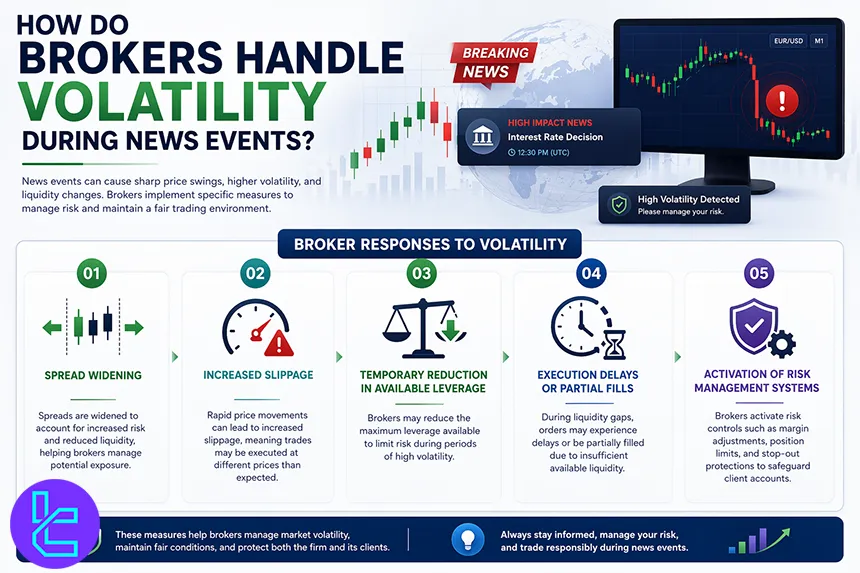
Brokers with strong infrastructure and deep liquidity partnerships are better equipped to maintain stability, minimizing disruptions and ensuring more reliable execution even under extreme market conditions.
Which Trading Platforms Are Best for Fast Execution?
Trading platforms play a fundamental role in execution speed, order management, and overall trading performance. For day traders, platforms must deliver low latency, stable connectivity, and advanced order handling capabilities. Platform performance comparison:
Platform | Execution Speed | Key Strengths | Limitations |
MT4 | Fast | Lightweight, stable, widely supported | Limited advanced tools |
MT5 | Very Fast | Multi-asset support, advanced indicators | Slightly heavier than MT4 |
cTrader | Ultra Fast | ECN integration, Depth of Market (DOM) | Less broker availability |
TradingView | Moderate | Superior charting, web-based access | Execution depends on broker |
cTrader is often preferred by professional day traders due to its direct ECN integration and detailed market depth visibility. MT5 is also widely used for its balance between speed and advanced functionality.
TradingView, while excellent for analysis, depends on broker integration for execution, making it more suitable as a complementary tool rather than a primary execution platform.
Selecting a platform with fast execution and stable performance ensures more accurate trade entries and exits in high-speed trading environments.
How to Verify the Regulation of a Forex Broker?
Verifying the regulation of a Forex broker is essential for ensuring fund safety, operational transparency, and compliance with financial standards. Day traders, who frequently move capital and rely on fast withdrawals, must prioritize regulated brokers. Step-by-Step verification process:
- Check License Information: Locate the broker’s license number on its official website and verify it through the regulator’s database;
- Identify the Regulatory Authority: Confirm whether the broker is regulated by reputable authorities such as FCA, ASIC, CySEC, or other recognized institutions;
- Verify Legal Entity: Ensure the broker operates under the same legal entity that holds the license, as some brokers use multiple jurisdictions;
- Confirm Client Protection Measures: Check for segregated accounts, negative balance protection, and participation in compensation schemes;
- Review Public Feedback: Analyze Trustpilot reviews and trader forums for issues related to withdrawals, compliance, or disputes.
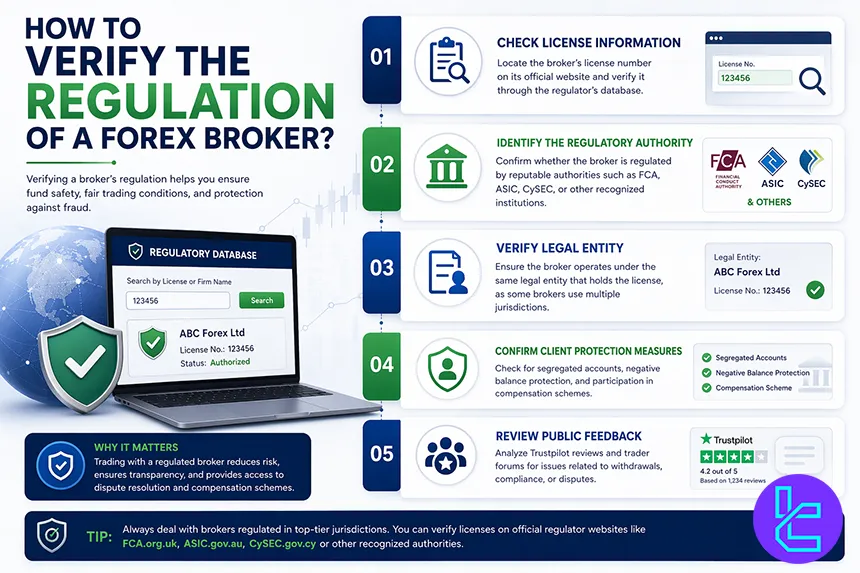
Unregulated or poorly regulated brokers may offer attractive trading conditions but expose traders to significant risks. Proper verification ensures a safer trading environment and protects capital from potential fraud or operational failures.
Comparing Day Trading with Other Trading Strategies at Forex Brokers
Trading strategies in Forex brokers vary significantly based on time horizon, execution frequency, risk exposure, and capital efficiency. Day trading focuses on capturing intraday price movements without holding positions overnight, while other strategies such as scalping, swing trading, and position trading operate across different timeframes and market conditions.
Each approach requires a distinct combination of execution speed, spread sensitivity, and risk management discipline. The table below compares day trading with other commonly used trading strategies in Forex markets.
Parameter | Day Trading | Scalping | Swing Trading | Position Trading |
Holding Period | Intraday (no overnight positions) | Seconds to minutes | Days to weeks | Weeks to months |
Trade Frequency | High | Very high | Moderate | Low |
Execution Sensitivity | High (requires fast execution) | Extremely high (ultra-low latency needed) | Medium | Low |
Spread Impact | Significant | Critical (tight spreads required) | Moderate | Minimal |
Profit Target per Trade | Small to medium | Very small | Medium | Large |
Risk Exposure | Intraday volatility only | Very short-term volatility | Multi-day market risk | Long-term market cycles |
Overnight Risk | None | None | Present | Significant |
Leverage Usage | Moderate to high | High | Moderate | Low to moderate |
Technical Analysis Dependency | High | Very high | High | Moderate |
Fundamental Analysis Role | Limited (news-based) | Minimal | Important | Very important |
Best Market Conditions | High liquidity, intraday volatility | Ultra-liquid, stable spreads | Trending markets | Strong macro trends |
Conclusion
Day trading in Forex demands a highly optimized trading environment where speed, cost efficiency, and execution precision define overall performance. Brokers that provide tight spreads, fast order execution, and stable platforms during high-volatility sessions create a clear advantage for short-term traders.
As highlighted throughout this guide, factors such as execution model, platform infrastructure, and fee structure directly influence trade outcomes, especially in high-frequency strategies.
Selecting the right broker requires a balanced evaluation of regulation, trading costs, execution quality, and platform capabilities. Day traders who prioritize ECN or STP execution, low-latency platforms, and reliable liquidity access are better positioned to achieve consistent results.
To gain further insight into our evaluation and selection process, please consult TradingFinder’s Forex methodology page.